Cart
0
You went looking for a water bowl and somehow ended up staring at a page full of floating platforms, gravity reservoirs, tilted bases, and anti-skid silicone rings — and the product descriptions weren't much help. Most just tell you the bowl is "perfect for pets." That's not a reason to buy anything.
The truth is, water bowl design actually matters. The wrong one means puddles on your floor, a cat who refuses to drink, or a large dog draining a tiny dish before dinner. The right one quietly solves a problem you've probably been tolerating for months. Here's how to figure out which is which.
Start With the Real Problem, Not the Product
Before you look at any bowl, name the specific frustration you're trying to fix. Is your dog a splasher who soaks the mat every time he drinks? Does your cat stare at her bowl like it personally offended her? Do you have three pets and one bowl that's always empty by noon? Each of those is a different problem, and each has a design built for it.
Anti-Spill Bowls: For the Enthusiastic Drinker
Anti-spill designs typically feature a narrowed opening, a weighted or non-slip base, or a raised inner lip that slows the water as the animal drinks. Some use a floating disc inside the bowl that limits how much water is accessible at once — the pet can drink through or around it, but can't bulldoze a wave over the rim.
This is the design for dogs who drink like they're racing — large breeds especially, or any dog that dips its whole muzzle in and lifts its head while still chewing. It's also genuinely useful for travel, where a bowl sitting in a moving car or on a rocking boat needs to stay put.
The trade-off: some dogs find the floating disc confusing at first and need a day or two to figure it out. If your dog is already a tentative drinker, this probably isn't the bowl to start with.
Gravity-Fed Bowls and Dispensers: For Busy Households
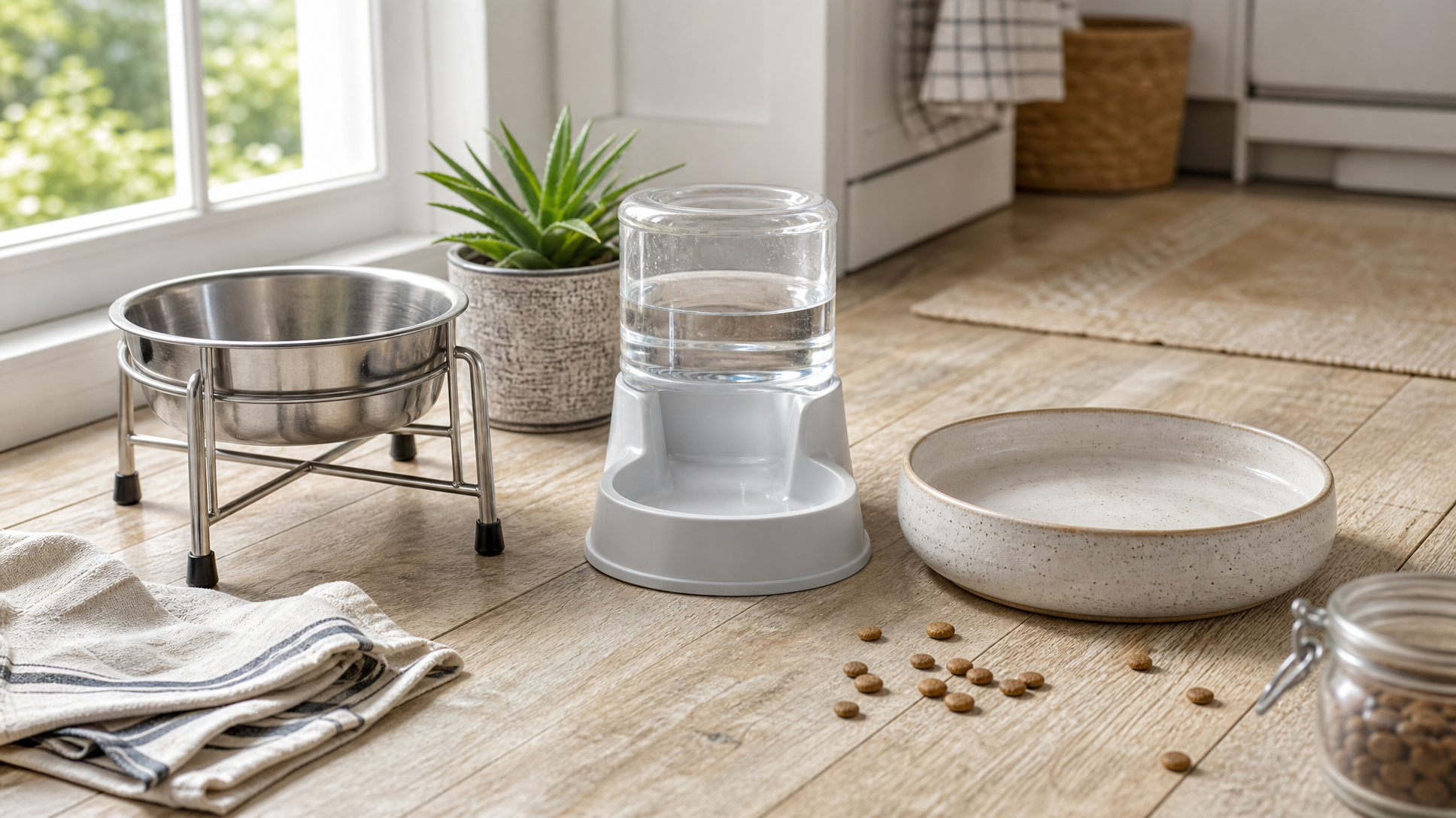
A gravity-fed design uses a reservoir — usually an inverted bottle or jug — that releases water into a base dish as the pet drinks, maintaining a consistent level automatically. You fill it once, and it tops itself off throughout the day.
This is the right call when you have multiple pets, a dog who drinks a lot, or a household where refilling the bowl twice a day just doesn't happen reliably. It's also useful if you're away from home for stretches of the day and want to know the water supply won't run out.
What it won't do: keep water moving or fresh-tasting. A gravity dispenser holds still, standing water — which is fine for most dogs, but can be a dealbreaker for cats (more on that below). Also check the reservoir capacity against your pet's actual daily intake before buying; a very large dog can drain a small reservoir faster than you'd expect.
Elevated and Tilted Bowls: For Comfort and Posture
Raised bowls lift the drinking surface off the floor, reducing the angle at which a pet has to bend its neck to reach the water. Tilted designs angle the bowl slightly toward the pet for a similar reason.
Large and giant breeds are the clearest beneficiaries — bending all the way to floor level to drink puts strain on the neck and joints over time, and an elevated bowl simply makes the motion more natural. Senior dogs with arthritis or mobility issues often drink more consistently when the bowl is at a comfortable height.
For cats, a shallow, wide, tilted dish can also help pets who are sensitive about their whiskers touching the bowl sides — a real quirk that's more common than it sounds, and one reason a cat might drink reluctantly from a deep, narrow bowl.
Slow-Flow and Floating-Platform Bowls: For the Messy Middle Ground
Some bowls combine an anti-spill floating disc with a wider, shallower design — the disc sits on the water surface and the pet drinks from around it. This limits the accessible water depth without restricting access entirely, which makes it effective for medium-sized dogs who splash but aren't full-on splashers.
It's a good middle-ground option if you're not sure whether a full anti-spill bowl is necessary, or if you want something that's easier to clean than a complex gravity dispenser.
What About Cats Specifically?
Cats have a reputation for being picky about water, and it's not entirely unfair. Many cats prefer moving water to still water — an instinct that likely traces back to the fact that still water in nature is more likely to be stagnant. Research published through veterinary sources has noted that cats can be chronically under-hydrated, partly because they don't drink still water as readily as dogs do.
If your cat ignores the bowl but drinks from a dripping faucet, that's your answer: a pet fountain (a motorized circulating water bowl) is likely to get more use than any static design. Fountains aren't technically a "bowl" in the traditional sense, but they belong in this conversation because they solve the cat-hydration problem that no standard bowl design fully addresses.
For cats who are fine with still water but picky about the bowl itself, go wide and shallow — less whisker contact, more willingness to drink.
Multi-Pet Households: Size and Placement Matter More Than Design
If you have more than one pet drinking from the same water source, the bowl design matters less than the total capacity and how many stations you have. A single gravity dispenser with a large reservoir can work well, but in a household where a dog and a cat share space, separate water stations in different locations often lead to better hydration for both — cats especially tend to avoid drinking near where they eat or near a dog's territory.
For large dogs (above 50 lbs), a standard small bowl is simply undersized — check out the options sized for larger pets to make sure you're not setting up a bowl your dog empties in one sitting.
A Quick Decision Map
- Dog splashes water everywhere: Anti-spill bowl with floating disc or weighted base
- Bowl runs empty before you get home: Gravity-fed dispenser with large reservoir
- Large or senior dog with joint issues: Elevated or raised bowl at appropriate height
- Cat ignores the bowl but drinks from the tap: Circulating pet fountain
- Cat drinks reluctantly from a deep bowl: Wide, shallow dish — tilted if possible
- Multiple pets, one water source: Large-capacity gravity dispenser, or multiple stations
None of these are exotic or expensive solutions. They're just designs built for specific situations — and once you name your situation, the right pick becomes obvious.
If you're also thinking about how your dog's collar or gear fits into their overall comfort routine, our guide on choosing the right collar for large and strong breeds applies the same logic: match the design to the dog, not the other way around.
Browse Petocart's full range of bowls and feeders — designed for real pet-parent problems, with free shipping across the USA. First-time shopper? Use code WELCOME5 for 5% off your order.
Frequently Asked Questions
Why does my cat refuse to drink from her water bowl?
Cats are often put off by still, stagnant water — an instinct rooted in the fact that moving water is typically fresher. If your cat ignores her bowl but drinks from a running faucet, a circulating pet fountain is usually the most effective fix. Also check the bowl depth: cats with sensitive whiskers often avoid deep, narrow bowls and do much better with a wide, shallow dish.
Are anti-spill bowls safe for all dogs?
Yes, but they're not the right fit for every dog. Anti-spill bowls with floating discs work well for enthusiastic or messy drinkers, but tentative or anxious dogs may find the disc confusing at first. Give your dog a day or two to adjust. If they consistently avoid the bowl after that, a standard wide bowl or an elevated design may suit them better.
How often should I clean a gravity-fed water dispenser?
More often than you might think. Even though a gravity dispenser refills itself, the base dish and reservoir can develop biofilm (a slimy bacterial layer) within a few days, especially in warm environments. A thorough rinse and scrub every two to three days is a reasonable baseline, with a deeper clean of the reservoir weekly. Check the manufacturer's instructions for your specific model.
Does bowl material — plastic, stainless steel, ceramic — actually matter?
It does, particularly for hygiene and durability. Plastic bowls can develop fine scratches over time that harbor bacteria and are harder to fully sanitize. Stainless steel and ceramic are generally easier to clean and less prone to bacterial buildup. Some pets also develop skin reactions (chin acne in cats, for example) that have been linked to plastic bowls. If you're replacing a bowl anyway, stainless steel or ceramic is usually the safer long-term choice.