Cart
0
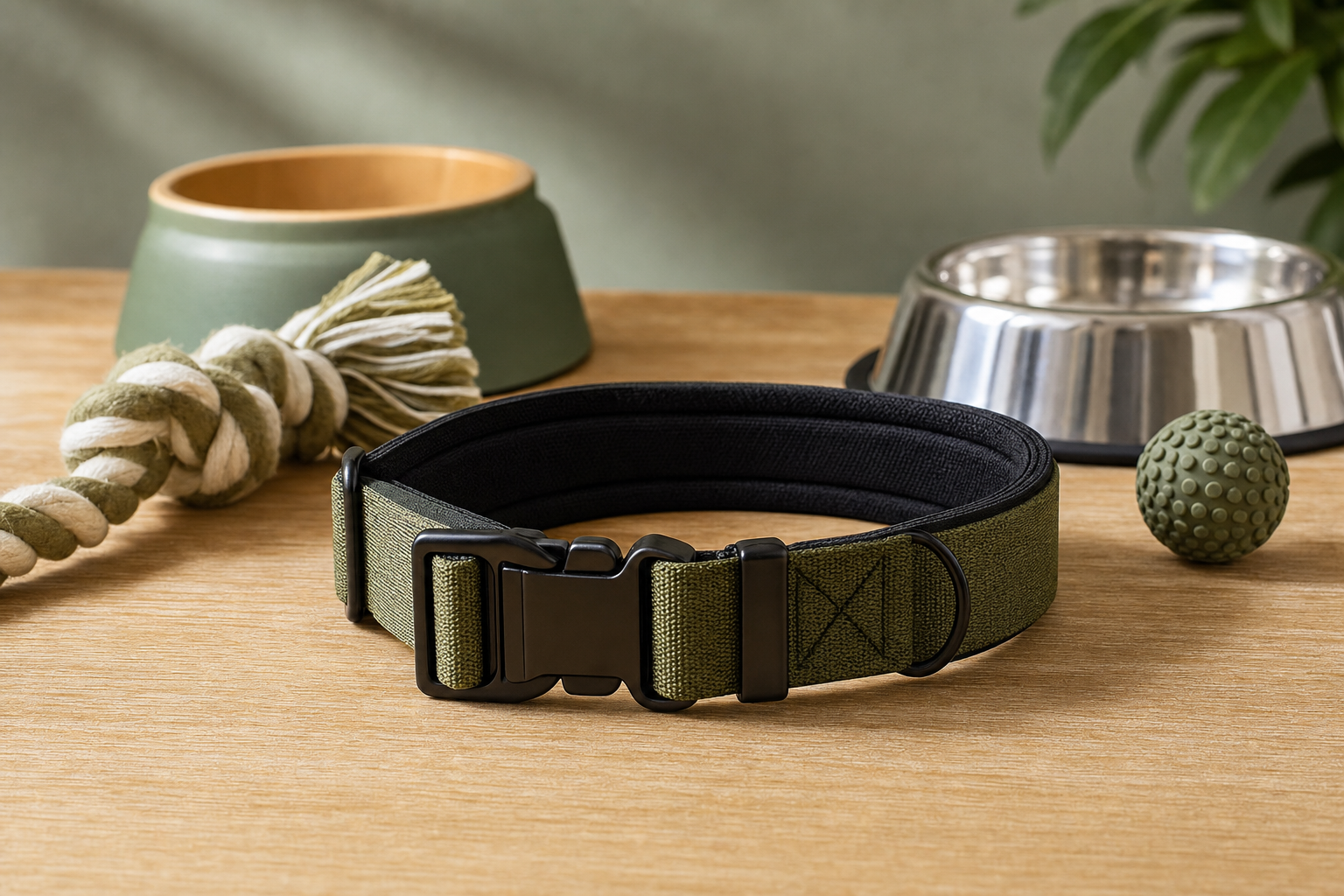
Why Large Breeds Need a Different Kind of Collar
A collar that works fine on a Beagle can fail completely on a Rottweiler. Large and strong breeds put real mechanical stress on collars every single day — lunging at squirrels, pulling toward other dogs, or simply leaning into the leash on a walk. The stitching, buckle, and material all have to be up to the job.
This guide covers the key things to look for when buying a collar for a big dog, and why cutting corners on any one of them is a risk not worth taking.
What to Look for in a Dog Collar for Large Breeds
1. Material That Can Take the Strain
For large breeds, the material is the foundation of everything else. The two most reliable options are full-grain leather and heavy-duty nylon webbing. Full-grain leather is dense, naturally strong, and gets more supple with use rather than fraying or cracking. Heavy-duty nylon can also work, but the quality varies widely — look for thick, tightly woven webbing, not the thin strapping found on budget collars.
Avoid collars made from thin, single-layer materials or those with decorative elements that compromise the structural integrity of the strap itself.
2. Width Matters More Than You Think
A wider collar distributes pressure across a larger surface area of the neck, which is more comfortable for the dog and reduces the chance of the collar cutting in during a strong pull. For most large breeds, a collar that is at least 1.5 inches wide is a sensible starting point. Very large or muscular breeds — Mastiffs, Saint Bernards, large working dogs — often do better with collars in the 2-inch range.
A narrow collar on a powerful dog doesn't just risk comfort; it risks the collar snapping or rolling, which can compromise control at exactly the wrong moment.
3. Buckle and Hardware Quality
Plastic side-release buckles are standard on most everyday collars, but they are not all equal. For large breeds, look for buckles rated for higher load weights, or consider collars with solid metal buckles or heavy-duty cast hardware. The D-ring where the leash attaches deserves equal attention — it should be welded or solid, not a thin stamped ring that can bend open under lateral force.
Check that all rivets, stitching points, and attachment hardware are reinforced. On a big dog, these are the points that fail first when the collar is cheap.
4. Getting the Fit Right
A collar that is too loose can slip over the head; one that is too tight causes discomfort and can restrict breathing. The standard rule is the two-finger test: you should be able to slide two fingers flat between the collar and your dog's neck, but no more than that.
Measure your dog's neck with a soft tape measure before ordering, and always check the size chart for the specific collar you are buying — sizing is not universal across brands. Neck circumference alone is not enough; also consider whether your dog has a thicker neck relative to their head, which affects how easy it is for them to back out of a collar.
5. Padding and Lining
For dogs that wear their collar all day, internal padding or a soft lining makes a meaningful difference. Unlined leather or raw nylon can cause chafing, especially on short-coated breeds where there is less fur acting as a buffer. Padded collars are particularly worth considering for dogs with skin sensitivities or those that are very active.
A Concrete Example: The Bestia Aztec Collar Line
The Bestia 'Aztec' collar is a good illustration of what a purpose-built large-breed collar looks like in practice. It is constructed from genuine leather and features heavy-duty hardware throughout — the kind of build quality that addresses the failure points discussed above. Bestia offers the Aztec in several colorways including Black, Brown, and Grey, so there is a practical option regardless of your dog's coat color or your personal preference.
Petocart carries the full Bestia Aztec range, and because it ships free across the USA, it is a straightforward choice if you want a collar that is genuinely built for a big dog rather than adapted from a one-size-fits-all design.

Common Mistakes to Avoid
- Buying based on looks alone. Decorative collars with thin straps and lightweight hardware are not suitable as everyday collars for large breeds, even if they look attractive.
- Skipping the size check. Ordering a size up 'to be safe' often results in a collar that is too loose to be secure. Always measure first.
- Ignoring wear and tear. Even a high-quality collar degrades over time. Check the stitching, hardware, and strap condition regularly. For guidance on when to replace pet gear, our post on pet toy maintenance and replacement covers the same principles that apply to collars and other accessories.
- Using a collar as the only form of ID. A collar can come off. Combine it with a microchip for reliable identification.
Collar vs. Harness: Which Is Right for Your Dog?
A collar is the standard choice for most dogs and works well for everyday walks when the dog is leash-trained and not a chronic puller. For dogs that pull heavily or have respiratory conditions such as a collapsed trachea, a harness that distributes pressure across the chest is often recommended by vets. The two are not mutually exclusive — many owners use a harness for walks and a collar for ID tags.
If you have a new large-breed puppy, our essential guide for new puppy owners covers the full range of gear and training decisions you will face in the first months.
Quick Reference: What to Check Before You Buy
- Material: full-grain leather or heavy-duty nylon webbing
- Width: 1.5 inches minimum for most large breeds
- Hardware: solid or welded D-ring, reinforced buckle rated for larger dogs
- Fit: two-finger rule, measured neck circumference matched to the brand's size chart
- Padding: consider lined collars for all-day wear or short-coated breeds
- Stitching: double-stitched or riveted at stress points
Shop the Right Collar for Your Big Dog
If you have been making do with a collar that was not designed for a large, strong breed, it is worth making the switch before an incident rather than after one. The Bestia Aztec collar line, available at Petocart, is built to the standards described in this guide — genuine leather, solid hardware, and a fit designed for bigger dogs. Shop the Bestia Aztec collar collection at Petocart — built for big dogs, ships free across the USA. First-time shoppers can use code WELCOME5 for 5% off their order.
Frequently Asked Questions
What width collar is best for a large dog?
Most large breeds do well with a collar that is at least 1.5 inches wide. Very large or muscular breeds such as Mastiffs or Saint Bernards often benefit from a 2-inch collar, which distributes pressure more evenly and is less likely to roll or cut in during a strong pull.
Is leather or nylon better for a strong dog?
Both can work, but quality matters more than material. Full-grain leather is naturally dense and durable, and tends to hold up well over years of use. Heavy-duty nylon webbing is a solid alternative if it is thick and tightly woven. Avoid thin, single-layer options in either material.
How do I know if a dog collar fits correctly?
Use the two-finger rule: you should be able to slide two fingers flat between the collar and your dog's neck, but no more. Before buying, measure your dog's neck with a soft tape measure and match that measurement to the specific brand's size chart, since sizing varies between manufacturers.
How often should I replace my large dog's collar?
Inspect the collar regularly for fraying, cracked leather, bent hardware, or weakened stitching — especially at the D-ring and buckle attachment points. A high-quality leather collar can last several years with basic care, but any collar showing structural wear should be replaced promptly rather than used until it fails.